Do photographers need their own domain?
Folio Team
Most portfolio platforms give you a free address when you sign up, usually your name followed by the platform's own domain. It works from the first minute and costs nothing. So the question comes up sooner or later: is paying for your own domain worth it, or is it one more thing to manage?
Our short answer is that it depends on what the portfolio is for. Here is how we think about it.
What a domain changes, and what it doesn't
A custom domain changes the address people see and type. Your photos, your layout and your loading speed stay exactly the same. A weak portfolio on a good domain is still a weak portfolio.
It also won't lift you up the search results by itself. Search engines rank pages on what is on them and on who links to them. The name in the address bar is not a shortcut.
What you do get is ownership of the address. A free address belongs to the platform. If you move to a different service one day, that address stays behind, along with every place you ever pasted it: your social bios, printed cards, directory listings, old emails, a blog that featured your work. With your own domain, you point it at the new home and the address on your business card still works. Individual page links may need tidying after a move, but the front door stays where people expect it.
The second thing you get is a tidier impression. A client who receives a gallery link under your studio's name sees your studio, with no third party in the address. It is a small detail, and clients who are paying for your work tend to notice small details.
The third is email. Once you own a domain you can set up an address like
[email protected] through an email provider. That is a separate service from
your portfolio, but it needs the domain first.
When the free address is fine
Plenty of photographers don't need a domain yet, and some never will.
If you are still building a body of work and showing it mostly to friends, the free address does the job. The same goes if photography is a hobby and you have no plans to take paid work, or if nearly all of your enquiries arrive through social media or word of mouth and the portfolio is just somewhere to send people afterwards.
We would start thinking about a domain when you begin charging for work, when you are about to print the address somewhere, or when you send client galleries often enough that the link has become part of how your business looks.
Choosing a name
Your own name is usually the safest choice. It won't go out of date if you move from weddings to commercial work, and it is what people will search for after someone recommends you.
If your name is taken or hard to spell, add one word: "photo", "studio", or whatever you already call your business. Be careful with names that tie you to one city or one kind of work. They read well now and feel awkward once you move or change direction.
A useful test is to say the address out loud to someone and ask them to type it. Hyphens, numbers and unusual spellings all fail this test, because you end up explaining them every time.
On endings, .com is still the one people assume. Your country's own ending is a good choice if you work locally, and newer endings such as .photography or .studio work too, though they are less familiar and sometimes cost more to renew. A name people can remember matters more than the ending.
Buying one without regrets
You buy a domain from a registrar and renew it every year. A few habits save trouble later:
- Register it yourself, in your own account, with your own email address. If a friend or a web designer buys it for you, they control it.
- Look at the renewal price as well as the first-year price. The two are often different.
- Turn on automatic renewal. A lapsed domain takes your site and your email down with it, and someone else can register it.
Where you buy the domain and where your portfolio lives can be two different companies. That is normal, and keeping them separate makes it easier to change platforms later.
What connecting it involves
This is the part that puts people off, and it is smaller than it sounds.
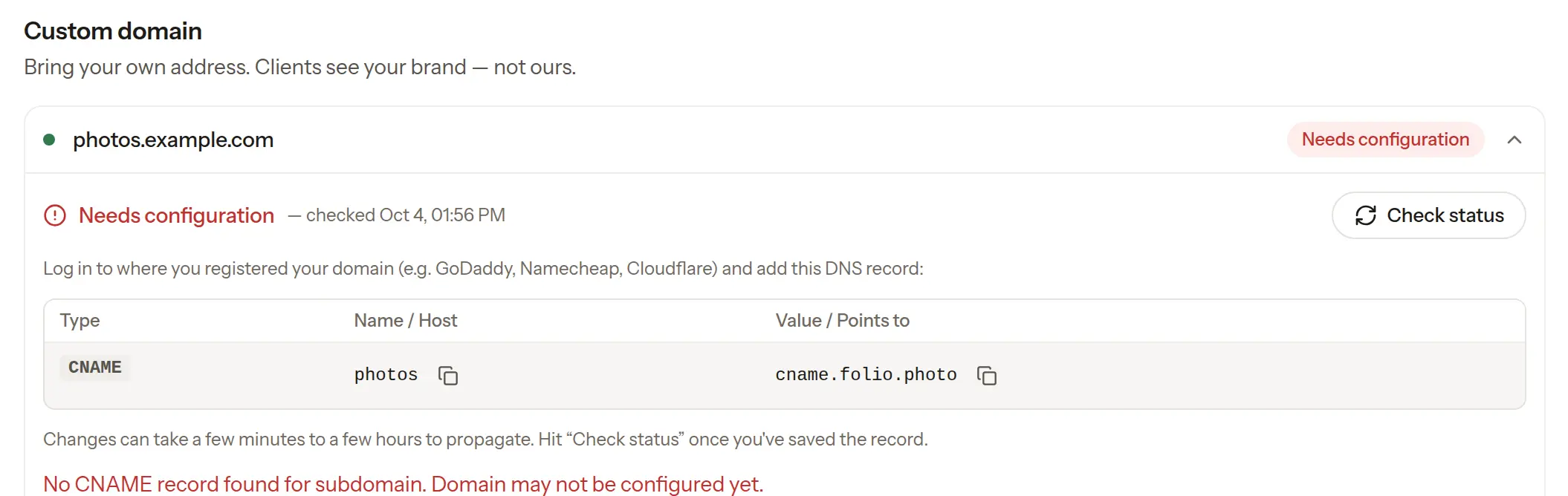
Every domain has a set of DNS records, which are instructions that tell browsers where to go when someone types your address. Connecting a domain to a portfolio platform means adding or editing one of those records so the address points at the platform.
In practice it goes like this. You enter your domain in the platform's settings, and it shows you a record to add. You sign in to your registrar, find the DNS page, and copy the record across. Then you wait. Changes to DNS can take anything from a few minutes to a day or so to reach everyone. After that, the platform should issue a security certificate so the address loads over HTTPS with the padlock in the browser.
If you already have a website on the domain, decide what is moving before you change anything. Editing the wrong record can take an existing site or mailbox offline. A subdomain such as galleries.yourname.com lets you leave the main site alone.
How this works in Folio
Every Folio portfolio starts on a free folio.photo address, and you can stay on it for as long as you like. When you want your own name on it, custom domains are available on paid plans. You add the DNS record shown in your portfolio settings, check the status there, and we take care of HTTPS once the record has been verified.
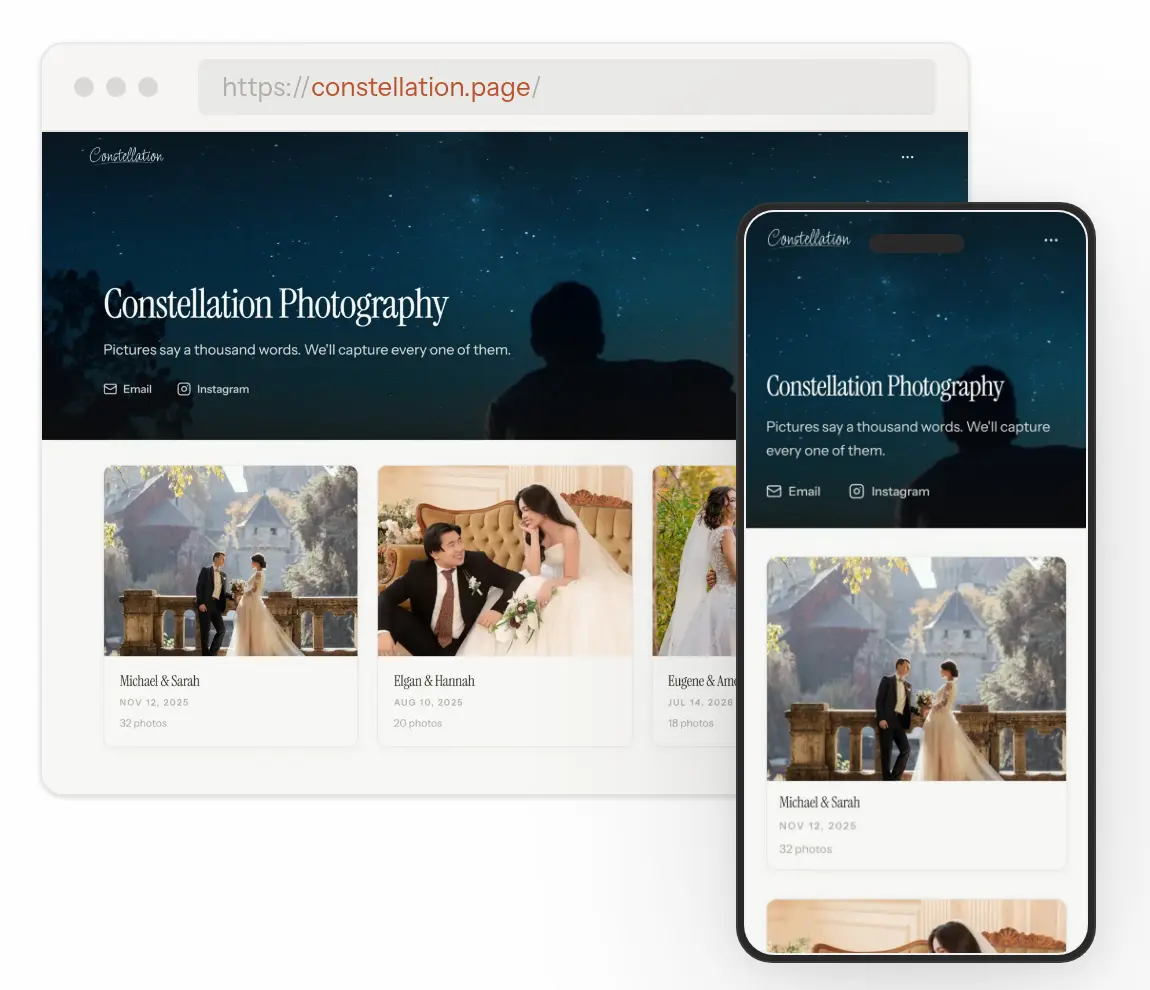
One domain covers both sides of your work. Your portfolio sits on the homepage and each client gallery gets a short link under the same address, with your logo in the header. Passwords, download controls and watermarks work the same way whether you use a custom domain or not.
Plan details are on the pricing page. If you aren't sure you need a domain yet, start on the free address and decide later.